




Resources are fundamental to delivering any programme or project, whether they are human or physical assets.
The intensity of their use and the types of resources will change over the lifecycle so there is a continual cycle that needs to be managed.
The scope of the Resource management theme includes:
|
As a minimum, all initiatives will have:
|
|
||||
Resource management is different at the programme level because:
|
Project Role/Activities |
Programme Manager |
Project Executive |
Project Manager |
Senior User |
Business Architect |
Business Analyst |
Head of Portfolio |
Portfolio Office |
|
Development of the resource plan |
Approves |
Authorises |
Actions |
Approves |
Assures |
Advises |
Assures |
Advises |
|
Create an organisation structure with reporting lines |
Approves |
Authorises |
Actions |
Approves |
Advises |
Advises |
Assures |
Advises |
|
Identification of the resources required |
Approves |
Authorises |
Actions |
Approves |
Advises |
Advises |
Assures |
Advises |
|
Analysis and profiling of resource requirements |
Approves |
Authorises |
Actions |
Approves |
None |
Advises |
Assures |
Advises |
|
Managing the resource utilisation |
Approves |
Authorises |
Actions |
Approves |
None |
Advises |
Assures |
Advises |
|
Delivering effective resource performance |
Approves |
Authorises |
Actions |
Approves |
None |
Advises |
Assures |
Advises |
|
Trend analysis of project resource performance |
Approves |
Authorises |
Actions |
Approves |
None |
Advises |
Assures |
Advises |
|
Reporting and monitoring of supplier contractual compliance |
Approves |
Authorises |
Actions |
Approves |
None |
Advises |
Assures |
Advises |
|
Maintenance of conformance to HR and procurement standards |
Approves |
Authorises |
Actions |
Advises |
None |
None |
Assures |
Advises |
|
Programme Role/Activities |
Senior Responsible Owner |
Business Change Manager |
Programme manager |
Business Architect |
Head of Portfolio |
Portfolio Office |
|
Development of the programme resource strategy |
Approves |
Authorises |
Actions |
Approves |
Assures |
Advises |
|
Create an organisation structure with reporting lines |
Approves |
Authorises |
Actions |
Approves |
Assures |
Advises |
|
Identification of the resources required |
Approves |
Authorises |
Actions |
Approves |
Assures |
Advises |
|
Analysis and profiling of resource requirements |
Approves |
Authorises |
Actions |
Approves |
Assures |
Advises |
|
Planning resources management |
Approves |
Authorises |
Actions |
Approves |
Assures |
Advises |
|
Trend analysis of resource performance |
Approves |
Authorises |
Actions |
Approves |
Assures |
Advises |
|
Maintenance of conformance to HR and procurement standards |
Approves |
Authorises |
Actions |
Advises |
Assures |
Advises |
|
Implementation of Commercial strategy |
Approves |
Authorises |
Actions |
Advises |
Assures |
Advises |
|
Management of supply chain contract compliance |
Approves |
Authorises |
Actions |
Advises |
Assures |
Advises |
Role Key:
|
Accountabilities |
"Authorises" - provides the Board endorsement that the activity has been undertaken |
|
"Approves" - provides business approval of the result of the activity |
|
|
Responsibilities |
"Actions" - responsible for ensuring the activity is undertaken effectively, can be delegated |
|
"Advises" - provides guidance and help where needed |
|
|
"Assurance" - formal independent review |
Click the stages in the cycle diagram to go to the relevant page:
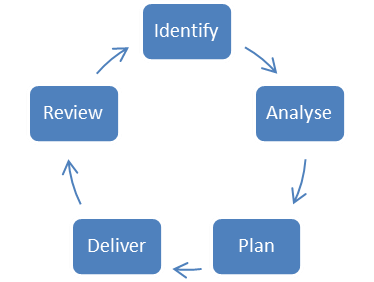
The 5 step cycle that is consistent across the themes also applies to Resource Management.
The resource requirements will be evolving and altering as the change moves through the lifecycle, so the process of optimising the resources will be an on-going theme.
From day one, there will need to be resources to move the change along. These will initially include the programme or project board plus the team and specialist resources that will do the work.
The lifecycle stages and milestones will provide guidance on what needs to be done in the short term and the resources that will be required to get through to the next gate.
To analyse what resources are required there will need to be the basis of a plan in place. So having an understanding of the requirements and the operating model will be essential to working out what skills, types and volume will be needed as well as when.
The analysis should establish whether the skills exist and there is the capacity to deliver the change using in-house resources or whether there will be a need to use the supply chain to provide the resources.
The types of resources that you might need could include people, facilities, ICT and equipment.
Analysis of specifications for the outputs and outcomes will help to identify what types of resources are needed.
The plan should be based on the stage of the lifecycle the project or programme is in. The resource plan should be part of the overall programme or Project Plan.
It should be based on the broader plan that sets out what outputs and capabilities will need to be delivered and by when.
The schedule will dictate where and when you will need the resources and in what volumes. It is likely that there will be conflicts with the plans creating pinch points for groups or particular types of resources.
The options for dealing with these will be by increasing the capacity through using external support or changing the timescale to avoid the conflict.
Where there are longer timescales, there may be time to develop internal staff to enable the change without drawing on so much external expertise.
External resources should be acquired through approved frameworks or a competitive tender to ensure the options and value are explored fully.
Deploying the resources will need to include induction arrangements being put into place to bring individuals (external and internal) up to speed so that they understand which stage the programme or project is at in the lifecycle and their role.
Everyone should have unique/specific terms of reference and clarity about what levels of performance are expected.
The management of delivery is about monitoring resource performance in relation to the projected productivity and quality to ensure the estimates in planning were accurate.
The performance of resources will be a main factor in terms of achieving the lifecycle stages and milestones to the timescales. Where productivity is not as expected, alternative approaches will need to be used.
Performance of resources will depend on skills of the team and their availability. Identifying hot spots where individuals are being overloaded is important. This overload could be in team or individual capacity.
Understanding the root cause of performance issues is a key element of managing delivery - establish whether the performance is linked to skills, experience, process or motivation for example - these factors should be captured in the review and plan adjusted accordingly.
There is a tendency to see a programme or a project as a process or set of tools and tasks that need to be done. In reality the success is often linked to the commitment and motivation of the team and the internal chemistry.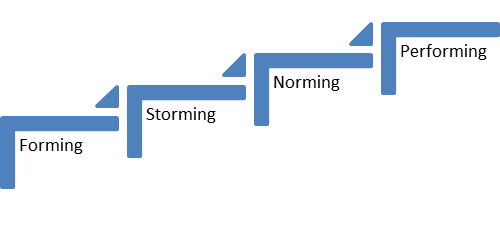
The same principles for establishing any team apply to programmes and projects. Therefore, effort to gain performance from the team is required.
It is more complex than an operational group. The team may not be stable or consistent throughout. Different skills will be needed at different stages of the lifecycle and, as such, there will need to be transition arrangements in place that allow the team to expand and contract without degradation of performance.
During team formation – the ‘forming’ stage - the structures should be based on the standard governance models for programmes and projects. There should be clearly defined roles and responsibilities provided, based on the role templates. When forming the team, consideration of personality types as well as skills will be important to ensure that they can function together.
As the team start working together there will be conflicts, as individuals work out their roles within the teams and how they interact with each other. It is helpful to enable this through team building events and setting boundaries within which such issues can be resolved. The key thing to getting through the ‘Storming’ phase is stability, or as much as possible.
Once the team has reached ‘Norming’, everyone should know their role and where each other fits into the team. The productivity and performance should be improving at this point as the territory is understood. Integrating new members to the team creates a mini re-run of the cycle as everyone works out how they fit in.
‘Performing’ is the optimal stage where everyone understands their role and the working relationships have matured. This is where productivity will be at its highest, so the team management is focused at maintaining this state for as long as possible.
Just as many operational parts of an organization depend on their suppliers providing goods or services that are fit for purpose, so too is a programme dependent on its suppliers.
Quality in a programme has to assure that suppliers apply quality management to their processes in order to ensure that they will deliver their obligations to the programme and that they are aligned effectively to the way the programme operates.
Effective supply chain management will provide agility and flexibility through the provision of resources and services as and when the programme needs them. Effective procurement is essential to ensure that the right partners are selected, and the effective management of partners, once selected, is essential to good programme delivery.
The programme should seek to exploit the expertise of its supply chain to build its internal knowledge and abilities whilst ensuring that it does not become dependent or exposed to a level that leaves itself open to exploitation by the supply chain.
We hope you find value in this public version. If you would like your own bespoke framework or would like to talk through the framework with us, please contact us at contactme@aspireeurope.com.